
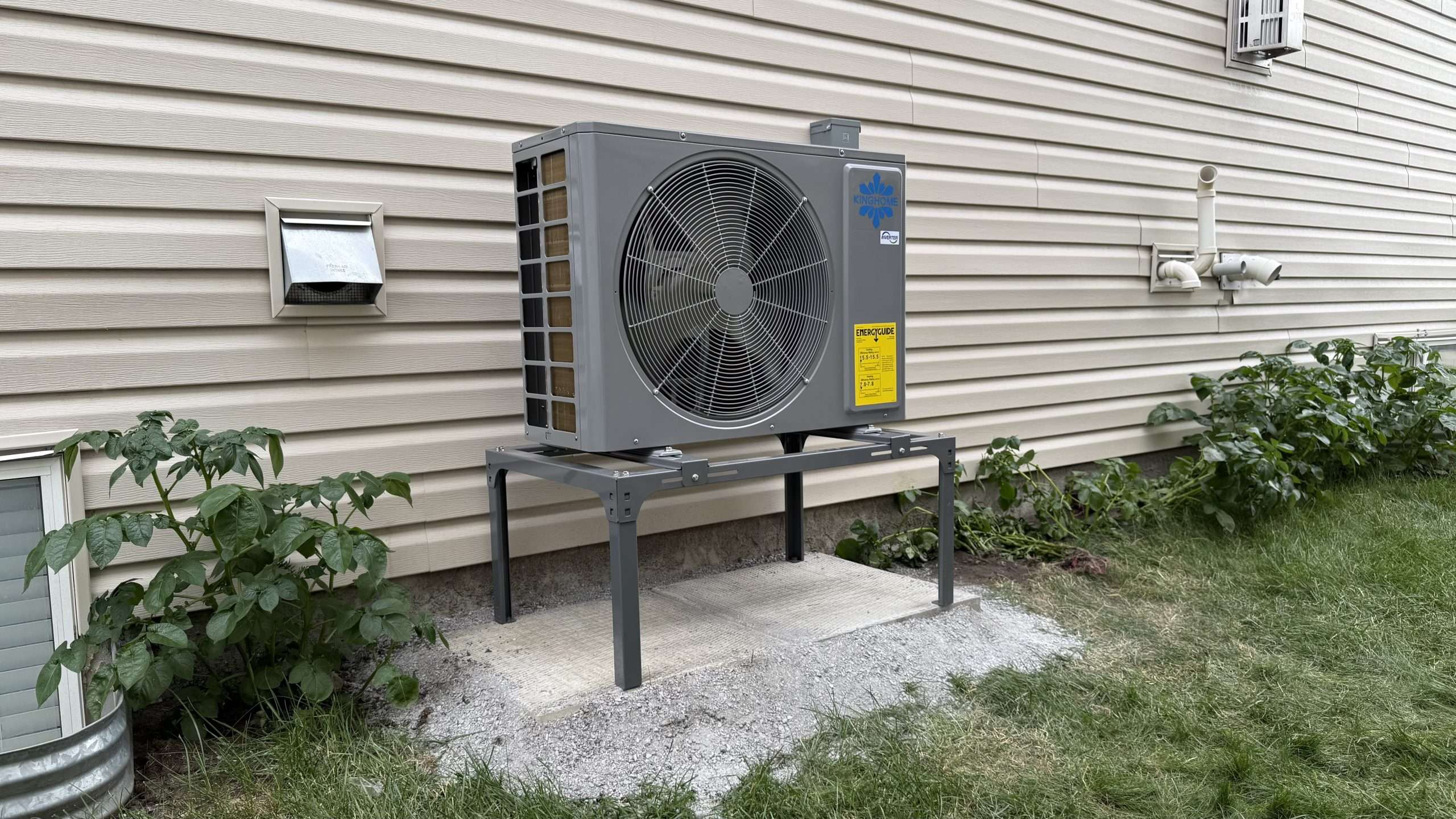
Heat pumps are becoming an increasingly popular choice for Ottawa homeowners looking for reliable heating and cooling with improved energy efficiency. Modern heat pump systems provide year-round comfort by delivering both heating during Ottawa winters and cooling during hot summer months.
At JD Swallow, we help homeowners choose the right heat pump system based on:
Our team installs and services high-quality heat pump systems designed to perform reliably in Ottawa’s changing climate conditions.
If you’re considering upgrading your home comfort system, a professionally installed heat pump can provide efficient heating and cooling while helping reduce energy usage throughout the year.
At JD Swallow, we install a wide range of heat pumps in Ottawa and surrounding communities. Our team helps you choose the right solution based on your home size, comfort goals, energy efficiency needs, and budget.
Central heat pumps work with your home’s existing ductwork to provide whole-home heating and cooling. These systems offer consistent comfort, improved energy efficiency, and reliable year-round performance.
Ductless heat pumps, also known as mini-split systems, are ideal for homes without ductwork, room additions, basements, garages, or areas with inconsistent temperatures.
Benefits include:
Designed specifically for colder regions like Ottawa, cold climate heat pumps are built to perform efficiently during harsh winter temperatures while also providing cooling in the summer.
These systems can help homeowners:
Hybrid heating systems combine a heat pump with a furnace to maximize comfort and energy efficiency throughout changing seasonal temperatures.
These systems automatically switch between heating sources based on outdoor conditions to optimize performance and operating costs.
Modern high-efficiency heat pumps are designed to improve comfort while lowering energy consumption and reducing environmental impact.
Many homeowners choose high-efficiency systems to:
Our experienced HVAC technicians ensure every heat pump installation is properly sized, professionally installed, and optimized for long-term performance in Ottawa’s climate.
If your system isn’t heating or cooling properly, our team provides fast and reliable heat pump repair in Ottawa.
Common heat pump problems we repair include:
We service a wide range of heat pump makes and models and work quickly to restore comfort to your home.
Regular maintenance helps keep your heat pump operating efficiently throughout the year. Our heat pump maintenance services help Ottawa homeowners reduce breakdowns, improve performance, and extend system lifespan.
Maintenance services include:
Routine service can help improve efficiency and keep your system running reliably through Ottawa’s extreme seasonal temperatures.
When you need to replace your system or want to upgrade to a more energy efficient heating and cooling method, JD Swallow is proudly partnered with FinanceIt, an industry leader in financial solutions for home improvements. With FinanceIt, we can help you purchase the best solution for your home through affordable financing. FinanceIt provides fast, fair and budget-friendly payment options to meet your needs.
If you’re looking for a reliable heat pump installer in Ottawa, JD Swallow Heating and Cooling is here for you. Our team of experienced sales consultants can help you choose the right heat pump for your home and provide professional installation services. We also offer maintenance and repair services to keep your heat pump running smoothly.

For more information about our Heat Pumps service or to schedule a service, call us at (613) 822-7974 or visit our contact page.
The short answer is YES. You will always see value in owning a heat pump. A heat pump does not have to create the heat. The heat already exists, so the heat pump only uses energy to move that heat into your home. But, in order to assess which actual heat pump is best for you there are a number of things we must do.
The first step is to do a Heat Loss/Heat Gain calculation. We need to know how much heat your house needs on the coldest day of the year in order to keep the indoor temperature at a comfortable +21C. Part of our consultation is to do a proper load calculation. This is also commonly referred to as a Manual J calculation, or a Design Heat Loss.
Secondly, we need to look at different heat pump models, sizes, and outputs in order to come up with the best solution for your home. There are many different heat pumps on the market, some are standard heat pumps while others are cold climate heat pumps. There are heat pumps for small houses and heat pumps for really big houses, and everything in between.
Lastly, once we know how much heat your house needs on the coldest day of the year, and how much heat the selected heat pumps will provide we will be able to calculate your balance point temperature. This is the most important temperature that we need to know. This is the temperature at which your heat pump will be able to provide you with all the heat you need without needing supplemental heat. This is different from the shut off point.
Manufacturers will provide us with the shut off point for specific heat pumps. For example, Heat Pump “X” may be able to run to temperatures as low as -30 C. This means that that specific heat pump will continue to operate and provide heat down to temperatures as low as-30 C. But when the temperature drops to -31 C, that heat pump will shut itself down because it’s just too darn cold to run.
Manufacturers are not able provide a balance point temperature and that is because every house is unique… so every house has a different balance point. Newer homes or smaller homes with more insulation, better windows, and a tighter building envelope don’t need as much heat. Alternatively larger homes and older homes that have not been updated will require more heat. As such every heat pump make, model, and size will have a different effect on the bottom line, on how much heat it will produce, on how much energy you will save, and satisfied you will be with your new purchase. Let us show you how an engineered approach to selecting your heat pump will ensure your new heat pump will meet your expectations.
Once we have calculated your Design Heat Loss and selected a few heat pumps models and sizes we will be able to plot the output of these heat pumps, to calculate their balance points, and to provide you with options so that you can make the best choice for your needs.
“If you hear from someone that tells you their heat pump is going to work great for you without taking the time to fully understand your home, to assess your comfort needs and to actually do the calculations, then they are either naïve or trying to make a sale. All Heat Pumps Are Not Created Equal.” (Call out, please place where you see fit)
There are several ways to address this. Often the heat pump can be coupled to an existing HVAC system whereby in other scenarios the heat pump will completely replace the existing heating and cooling system.
If you have a centrally ducted heating and cooling system, in other words you have duct work, then you will likely want to consider a heat pump that is going to work with your existing ductwork. If this is the case you may choose to go for a dual fuel system whereby the heat pump will be coupled to your existing furnace, if it is newer and compatible, or coupled to a new furnace. A dual fuel system is often referred to as a hybrid heat pump system. Another choice may be to eliminate fossil fuels altogether and to opt for a full heat pump system. This system will consist of a cold climate heat pump coupled to any electric furnace.
If you do not have duct work as you live in a home with electric baseboards or with a hot water boiler system, then a ductless style heat pump will be a logical choice. This style of heat pump has been designed specifically for houses like yours. This allows you to use your heat pump in lieu of your baseboards or boiler for much of the heating season. This can result in considerable savings on your energy bills.
Once we have calculated your Design Heat Loss and selected a few heat pumps models and sizes we will be able to plot the output of these heat pumps, to calculate their balance points, and to provide you with options so that you can make the best choice for your needs.
“If you hear from someone that tells you their heat pump is going to work great for you without taking the time to fully understand your home, to assess your comfort needs and to actually do the calculations, then they are either naïve or trying to make a sale. All Heat Pumps Are Not Created Equal.” (Call out, please place where you see fit)
One of the most fantastic things about a heat pump is their ability to provide both heating and cooling. Naturally when in heating mode, they are using the heat that already exists so they are heating out homes at a fantastically efficient rate, with no carbon emissions. Because cold climate heat pumps modulate at rates between 100% down to 25% of their full capacity they only use as much energy as they need at a given moment. Cold climate heat pumps use inverters. These operate differently than traditional heat pump systems.
A standard heat pump, the kind of heat pump that you might have found on a home 20 years ago, and unfortunately still exist today, do not provide the same level of comfort, efficiency, and output of today’s cold climate heat pumps. When these heat pumps turn on, they draw full power from the grid. Whether it is extremely cold outside or only moderately cold they are drawing the same large amount of electricity. Yes, they will produce heat for you, but they are using a lot of electricity. Some newer single stage and 2-stage heat pumps use what is called a thermal expansion valve. What this does is that it restricts the flow of refrigerant to and from the outdoor unit, aka the heat pump, and the indoor unit known as the coil. This has a marginal effect on the efficiency of the heat pump and that it is kind of like driving your car with your gas pedal floored and using your brake to regulate your speed. Because cold climate heat pumps use inverters, they were able to start off at a low rate an increase only when required. To use the car analogy, it is like just tapping the gas pedal when you need a little more. As a result, these are the most efficient heat pumps on the market.
On top of that, one of the most wonderful things about a cold climate heat pump is their ability to maintain an optimal balance between temperature and humidity in the cooling season. Often homeowners will complain their air conditioner is not capable of properly cooling the second floor and that the basement is cold enough to hang meat! This is typical of an oversized and or single stage cooling system. The beauty of your cold climate heat pump is that it is a modulating cooling system. It has a stage for every temperature during the cooling season. It is like having a perfectly sized air conditioner for every day of the summer, maintaining an ultimate balance between temperature and humidity.
If you have a centrally ducted heating and cooling system, in other words you have duct work, then you will likely want to consider a heat pump that is going to work with your existing ductwork. If this is the case you may choose to go for a dual fuel system whereby the heat pump will be coupled to your existing furnace, if it is newer and compatible, or coupled to a new furnace. A dual fuel system is often referred to as a hybrid heat pump system. Another choice may be to eliminate fossil fuels altogether and to opt for a full heat pump system. This system will consist of a cold climate heat pump coupled to any electric furnace.
If you do not have duct work as you live in a home with electric baseboards or with a hot water boiler system, then a ductless style heat pump will be a logical choice. This style of heat pump has been designed specifically for houses like yours. This allows you to use your heat pump in lieu of your baseboards or boiler for much of the heating season. This can result in considerable savings on your energy bills.
Once we have calculated your Design Heat Loss and selected a few heat pumps models and sizes we will be able to plot the output of these heat pumps, to calculate their balance points, and to provide you with options so that you can make the best choice for your needs.
“If you hear from someone that tells you their heat pump is going to work great for you without taking the time to fully understand your home, to assess your comfort needs and to actually do the calculations, then they are either naïve or trying to make a sale. All Heat Pumps Are Not Created Equal.” (Call out, please place where you see fit)
Simply put, a heat pump is an appliance that finds heat and moves it. The heat already exists, so your heat pump finds that heat, and pumps it into your home.
You may have heard that heat pumps don’t work well in Ottawa… and if you had a heat pump 20-30 years ago, you would be right. But as demand for super high efficient heating systems has increased, manufacturers have produced cold climate heat pumps capable of extracting heat in temperatures as cold as -30C, and they work beautifully, efficiently, and quietly, perfect for our Ottawa climate.
It is very common to confuse heat with temperature. Even if the temperature is really cold, like -20C, there is still heat available in the air, in fact there is still a ton of heat when it is -100C and let’s face it, it never gets that cold. The thing is that in the winter, that heat is less concentrated when it is cold outside. What your heat pump does is it gathers up that heat and moves it into your house, and naturally when you add heat to your home, the temperature will rise.
You may have heard that heat pumps don’t work well in Ottawa… and if you had a heat pump 20-30 years ago, you would be right. But as demand for super high efficient heating systems has increased, manufacturers have produced cold climate heat pumps capable of extracting heat in temperatures as cold as -30C, and they work beautifully, efficiently, and quietly, perfect for our Ottawa climate.
No. The beauty of a heat pump is that they not only provide your heating at an incredibly efficient rate, but they provide all of your cooling as well, using less electricity, and a better balance between temperature and humidity than your current air conditioner.
Yes, it is always a good idea to use a heat pump for heating. If your house is old and leaky and you have very little insulation, then it is losing heat quickly. Whether you heat your home with a furnace or a heat pump, you’re going to have to continually add heat to your home to maintain a comfortable indoor temperature. Because your house requires more heat than other homes, it makes even more sense to use a heat pump given that the heat pump is so efficient at producing heat. And, you may want to look at adding more insulation and draft proofing your home. An energy advisor will be able to help you to prioritize your upgrades to maximize your dollars spent.
Will a heat pump increase my electricity consumption? Yes… and then again maybe not. If you currently heat with gas, propane or oil, and you start using a heat pump then the answer is yes, your hydro bill will increase, but you will never have a gas, propane or oil bill ever again! On the other hand, if you currently heat with electricity, you should expect your hydro bill to drop by 50% – 70%.
Over the past decade, manufacturers have been increasingly pushing the envelope, making heat pumps more and more efficient. As such within the last decade, an organization called NEEP started testing and organizing heat pumps into two classifications: standard heat pumps and cold-climate heat pumps. Whether it is a central system or a ductless system, a cold-climate heat pump is our best investment (and will qualify for the highest rebates). A cold-climate air source heat pump provides the most heat at the highest efficiency, and the lowest operating cost, deep into the coldest weather of our Ottawa winter… vs. a standard heat pump that will provide heat for the shoulder seasons but will be using the supplemental heat much sooner in the winter.
Generally speaking, there are two types of heat pumps that exist. A geothermal, also called a ground source heat pump will extract heat from underground. These systems are fantastically efficient, but they do come at a price as they require drilling of wells, or a field/land in which to install the outdoor portion of the system. Air source heat pumps (also referred or as aerothermal systems) extract heat from the outside air. These systems don’t need any more room than an air conditioner requires, they are a fraction of the cost of a geothermal system, and because technology has improved so profoundly, they are very similar in efficiency to geothermal systems.
Great question and probably the most common question we receive. It all starts with a heat loss/heat gain calculation. Part of our design process is that we take the time to properly measure the heat loss and heat gain in your home in order to properly size your heat pump, even if we have to make a special trip back to your home on another day. It is imperative that we know how much heat your house needs on the coldest day of the year in order to provide you with the most correctly sized heat pump system for your home. There is no one-size-fits-all and anyone that says their heat pump is going to work great without truly understanding your home is either naïve, or just trying to make sale. This is about you, not us.
Yes, you have several options when it comes to heat pumps. If your home has ductwork, then you would use a central heat pump, similar to your existing furnace and air conditioner. If you don’t have ductwork, you would use a ductless system, also called a mini split. Ductless systems are also popular as you are able to create temperature zones whereby you can keep your master bedroom at a different temperature than your living room, for example (even if you have ductwork).
Yes… maybe. If you have ductwork, a heat pump “system” will consist of the heat pump (outdoor unit) coupled to a matched indoor unit such as a furnace, or air handler (also called a fan coil). The heat pump is the outdoor unit (that looks like an air conditioner) that collects the heat from the outdoor air. The furnace or air handler then distributes that heat throughout your house, using your ductwork.
Yes. Depending on the size of your home and how much heat your home needs on the coldest day of the year, will depend on the size, type, and configuration of your heat pump system. All heat pump systems require some sort of backup heat but designing your heat pump system to be as efficient as possible, to limit the use of supplemental heat, is our always our focus.
